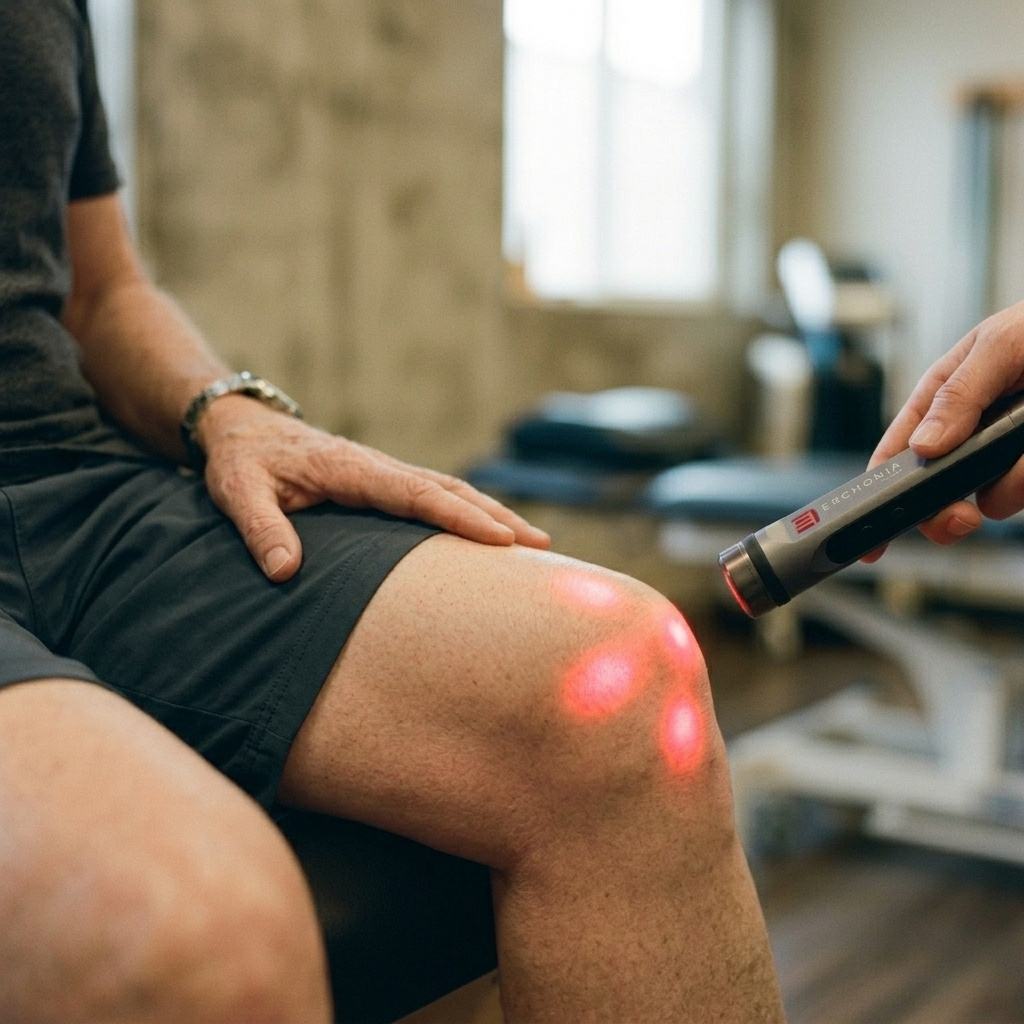
Cold laser therapy research has accumulated enough clinical data over recent years to shift the conversation. What started as an alternative treatment skeptics dismissed now has evidence supporting what practitioners observed in their practices: specific wavelengths of light reduce pain and accelerate healing without drugs or surgery.
The treatment goes by several names (low-level laser therapy, photobiomodulation, or cold laser) but the mechanism stays consistent. Unlike surgical lasers cutting tissue through heat, these devices deliver light energy penetrating skin and triggering cellular responses.
How Cold Laser Therapy Works at the Cellular Level
Here’s what the research shows about the biological mechanism. This centers on mitochondria (the structures inside cells producing energy). When specific wavelengths of red and near-infrared light hit these mitochondria, they absorb the energy through an enzyme called cytochrome c oxidase.
This absorption improves the efficiency of the electron transport chain, the cellular machinery responsible for converting nutrients into usable energy. Enhanced ATP production gives cells more resources to repair damage and maintain normal function.
The second major effect involves nitric oxide. Cold laser therapy increases nitric oxide levels in treated tissues. This molecule acts as a vasodilator. Blood vessels relax and widen, allowing more oxygen and nutrients to reach damaged areas while removing metabolic waste products more efficiently.
The combination creates conditions where tissue heals faster. This isn’t speculation. The cellular biology demonstrates this.
Clinical Evidence for Pain Reduction
A pattern emerges in the systematic reviews. A 2025 analysis looked at 44 randomized clinical trials involving 1,816 participants. The data showed cold laser therapy significantly reduced pain intensity with patients reporting 60-70% decreases on standard pain scales.
The most effective treatment parameters emerged from this analysis: wavelengths between 810 and 940 nanometers, energy densities of 3-12 joules per square centimeter, and treatment periods extending beyond four weeks.
For musculoskeletal disorders specifically, a meta-analysis confirmed LLLT effectively reduces pain in adult patients. The research noted following World Association for Laser Therapy dosage recommendations appeared to enhance treatment effectiveness.
These aren’t marginal improvements. Patients receiving cold laser therapy for low back pain showed a 72% success rate in clinical trials, compared to roughly 60% treated with opioids. The laser therapy carried none of the addiction risk or side effects. The gap is worth paying attention to.
Medication Reduction Potential
One of the most significant findings involves decreased reliance on pain medication. Studies document integrated use of cold laser therapy allows patients to reduce or eliminate pain-killing drugs.
Opioid dependence represents a public health crisis. Long-term NSAID use carries cardiovascular and gastrointestinal risks. A non-pharmacological treatment option matters. Research shows cold laser therapy serves as a useful component of mainstream pain management, reducing the need for medications carrying serious side effects. Reducing medication dependence while maintaining pain relief represents a fundamental shift in how to approach chronic pain.
This doesn’t mean cold laser therapy replaces all medication. But the treatment reduces how much patients need and for how long.
FDA Clearance and Clinical Applications
The FDA has granted market clearance to multiple low-level laser devices for specific therapeutic applications. Erchonia, one manufacturer, holds 22 FDA 510(k) clearances across various applications. One of the most extensive clearance portfolios in the category.
Clinical trials supporting these clearances demonstrate measurable outcomes. For back pain, Erchonia’s FX 635 laser received FDA clearance in May 2018 after showing a 72% success rate in reducing chronic low back pain.
Treatment applications extend beyond back pain. Clinical documentation shows effectiveness for:
-
Carpal tunnel syndrome and repetitive strain injuries
-
Tendinitis in shoulders, elbows, and knees
-
Plantar fasciitis and ankle sprains
-
Arthritis pain in multiple joints
-
Post-surgical recovery and wound healing
-
TMJ disorders and facial pain
Post-Surgical Recovery: A Case Study
A documented case demonstrates practical outcomes. A 48-year-old male underwent arthroscopic meniscus repair and experienced typical post-surgical complications: swelling, restricted mobility, and pain rated 7 out of 10.
Cold laser therapy was applied three times per week for four weeks using an 810-nanometer wavelength at 8 joules per square centimeter, with 10-minute sessions. After the treatment period, pain decreased to 2 out of 10, knee flexion improved by 40 degrees, and swelling significantly reduced.
The orthopedic team confirmed recovery occurred faster than average compared to standard rehabilitation protocols alone.
This represents one case. The example illustrates the type of outcome larger studies have documented across patient populations. Specific examples make abstract data real.
Emerging Applications in Neurodegenerative Conditions
Research has expanded beyond musculoskeletal applications. Clinical trials have shown potential benefits for neurodegenerative disorders including Alzheimer’s disease and Parkinson’s disease.
A May 2024 review concluded low-level laser therapy displayed significant potential in improving quality of life and slowing disease progression in these conditions. The mechanism likely involves the same mitochondrial enhancement benefiting tissue healing. Neurons require substantial energy to maintain function. Improved ATP production helps preserve neural health.
This research stays in earlier stages compared to pain management applications. The biological rationale is sound. Early results warrant continued investigation.
What Patients Should Know
Cold laser therapy sessions typically last 10-15 minutes. Patients feel no heat or pain during treatment. The sensation is minimal or absent. Most protocols require multiple sessions over several weeks to achieve optimal results.
The treatment works best when integrated into comprehensive care plans. For musculoskeletal conditions, combining cold laser therapy with appropriate exercise, manual therapy, and lifestyle modifications produces better outcomes than any single intervention alone.
Not all conditions respond equally. The strongest evidence supports use for chronic pain conditions, soft tissue injuries, and inflammatory disorders. Acute injuries often heal adequately without intervention. Cold laser therapy accelerates the process.
Safety Profile and Contraindications
Cold laser therapy carries minimal side effects when administered properly. The devices don’t generate heat damaging tissue. The light wavelengths used don’t carry the cancer risk associated with ultraviolet radiation.
Contraindications exist. Practitioners avoid treating directly over cancerous lesions. The therapy works on other body areas in cancer patients. Pregnant women should avoid treatment over the abdomen. Patients with photosensitivity disorders or those taking photosensitizing medications require careful evaluation before treatment.
The treatment’s safety profile represents one of the key advantages. Serious adverse effects are rare when protocols are followed correctly. In a healthcare landscape where every intervention seems to carry a trade-off, this matters more than most people realize.
The Current State of Research
The evidence base continues to expand. Systematic reviews now encompass thousands of patients across dozens of studies, moving cold laser therapy from experimental to evidence-supported status.
Research gaps remain. Optimal treatment parameters vary by condition, and studies continue to refine protocols for specific applications. The biological mechanisms are understood in broad terms, but researchers continue investigating the detailed cellular pathways involved.
What’s clear from current evidence: cold laser therapy produces measurable reductions in pain and inflammation, accelerates tissue healing, and does so without the risks associated with pharmaceutical interventions. The pattern emerges from thousands of patients across dozens of studies.
Finding Qualified Practitioners
Not all cold laser devices deliver the same results. The wavelength, power output, and treatment duration all affect outcomes. Practitioners should use FDA-cleared devices and follow evidence-based protocols.
Chiropractors, physical therapists, and other healthcare providers incorporate cold laser therapy into their practices. When evaluating providers, ask about their training, the specific device they use, and their experience treating your condition.
Documentation matters. Practitioners should maintain clinical records showing treatment parameters, patient response, and outcome measures. This allows for protocol adjustments and ensures accountability.
What to Expect from Treatment
Realistic expectations improve outcomes. Cold laser therapy typically requires multiple sessions before significant improvement occurs. Acute conditions respond within a few treatments, while chronic pain often requires 10-15 sessions over several weeks.
Response varies by individual. Some patients experience immediate relief, while others notice gradual improvement over the treatment course. Factors including condition severity, overall health status, and adherence to complementary recommendations all influence results. The treatment doesn’t work the same way for everyone. Understanding this going in matters.
The treatment works best as part of a comprehensive approach. Addressing underlying biomechanical issues, maintaining appropriate activity levels, and managing contributing factors produces better long-term outcomes than passive treatment alone.
The Bottom Line
Cold laser therapy has moved beyond anecdotal reports to evidence-based treatment status. The research demonstrates measurable benefits for pain reduction, tissue healing, and functional improvement across multiple conditions.
The mechanism is understood: specific wavelengths of light enhance cellular energy production and improve circulation, creating conditions where tissue heals more efficiently. Clinical trials confirm what this mechanism predicts. Patients experience significant pain reduction and faster recovery.
This doesn’t position cold laser therapy as a miracle cure. The treatment represents one tool among many for managing pain and promoting healing. The advantage lies in the safety profile, lack of systemic side effects, and potential to reduce reliance on medications carrying serious risks.
For patients exploring non-pharmaceutical pain management options, cold laser therapy warrants consideration. The evidence supports the use. The safety profile is favorable. The treatment integrates well with other therapeutic approaches.
The key is finding qualified practitioners who use appropriate protocols and maintain realistic expectations about what the treatment achieves. When these elements align, cold laser therapy offers a legitimate option for patients seeking relief from chronic pain and improved tissue healing.
For practitioners and patients who have explored cold laser therapy, clinical experience often reveals nuances about which conditions respond best. The research provides the foundation, but real-world application continues to refine understanding of optimal treatment protocols.