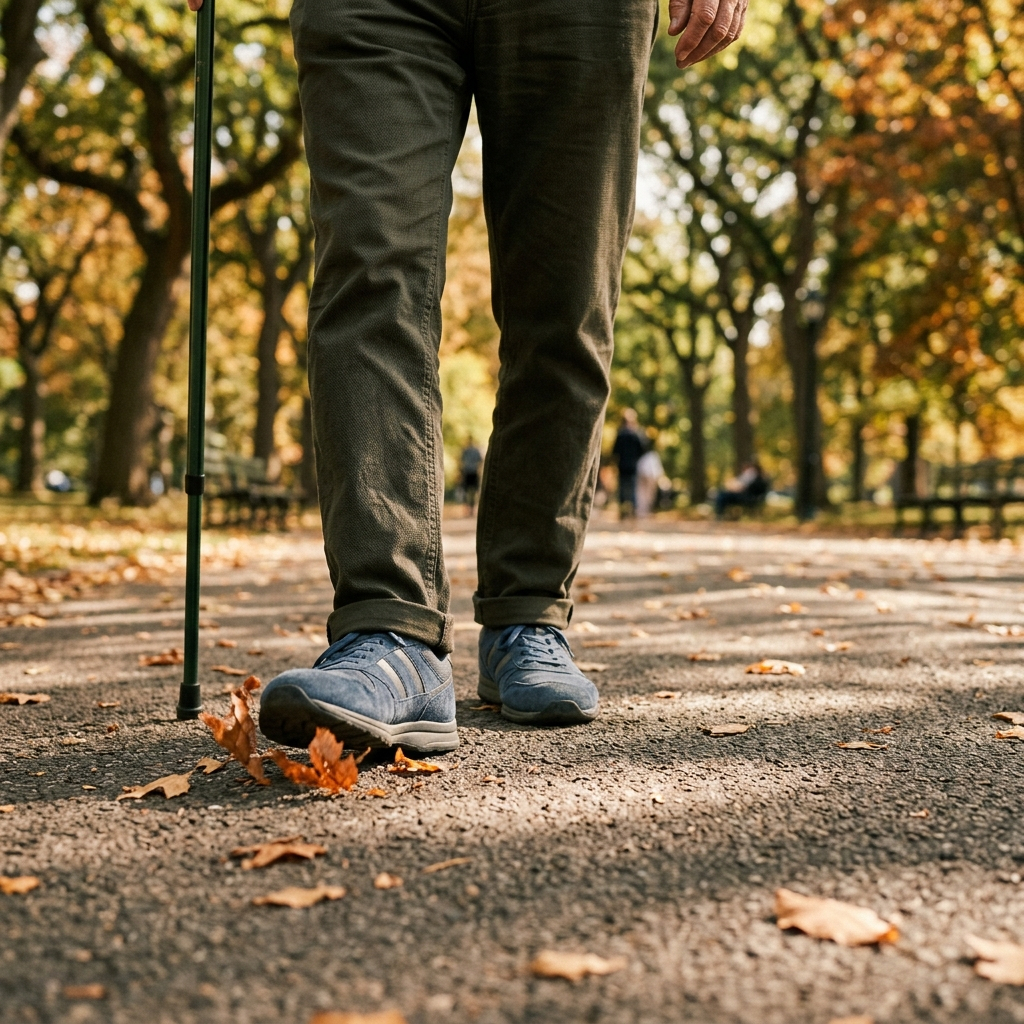
TL;DR: McMaster University research reveals that consistent low-intensity physical activity reduces chronic disease risk across 19 conditions by 10-75%, challenging the fitness industry’s intensity-focused messaging. Walking regularly produces similar cardiovascular benefits to high-intensity exercise, and consistency matters more than sporadic intense effort. The barrier to better health outcomes is lower than most people believe.
Core Findings:
-
Regular physical activity reduces risk across 19 chronic conditions simultaneously, with reductions up to 75% for breast cancer, 49% for cardiovascular disease, and 35% for diabetes
-
Walking one hour five times weekly provides approximately the same cardiovascular benefit as running 20 minutes three times weekly when total distance is equivalent
-
Consistent moderate activity throughout life produces 10-28% lower chronic disease incidence after age 60 compared to irregular intense exercise
-
Balance training programs reduce falls in older adults by 39-50%, addressing a leading cause of injury-related mortality
-
Low-intensity exercise produces meaningful clinical outcomes even in vulnerable populations like cancer survivors
McMaster University researchers have identified a pattern that challenges conventional fitness messaging. The data shows that regular physical activity reduces risk across 19 distinct chronic conditions simultaneously, but the mechanism producing these outcomes doesn’t require the intensity most people assume.
This creates a structural problem in how health benefits are communicated.
When practitioners talk about exercise, the conversation defaults to intensity thresholds and weekly volume targets. The messaging implies that meaningful health outcomes require crossing specific effort barriers. But recent research tracking over 231,000 health professionals across 32 years reveals something different: consistency matters more than sporadic high-volume activity.
The people who maintained recommended activity levels throughout the study period showed 10-28% lower incidence of major chronic diseases after age 60 compared to those who engaged in irregular bursts of intense exercise mixed with inactivity.
That gap represents a fundamental shift in how physical activity should be positioned.
How Does Physical Activity Protect Against Multiple Chronic Diseases?
A January 2025 University of Iowa study examined over 7,000 patients and found that those exercising moderately to vigorously at least 150 minutes per week had statistically significant lower risk across 19 chronic conditions. The protective effect wasn’t isolated to cardiovascular health or metabolic function. It extended across multiple physiological systems simultaneously.
The risk reduction magnitudes are substantial: up to 75% for breast cancer, 49% for cardiovascular disease, and 35% for diabetes.
These numbers represent the upper boundaries of what regular physical activity can achieve, but they also reveal something about the gap between potential outcomes and actual behavior. Physical inactivity remains one of the ten leading risk factors for global mortality, with 81% of adolescents and 23% of adults insufficiently active worldwide.
The problem isn’t that people don’t know exercise is beneficial. The problem is that the perceived barrier to entry exceeds what most people believe they can sustain.
Bottom Line: Physical activity operates as a multi-system protective mechanism across 19 chronic conditions, but the perceived difficulty of starting prevents most people from accessing these benefits.
What Exercise Intensity Actually Works for Health Benefits?
University Hospitals research confirms that walking for one hour five times a week produces approximately the same cardiovascular benefit as running 20 minutes three times weekly when total distance is equivalent. This finding challenges fitness industry narratives that prioritize intensity over consistency.
You get most cardiovascular benefits toward the lower end of the exercise spectrum.
That statement contradicts the messaging most people encounter, but the data supports it. Research on older adults shows that low-intensity walking activity is associated with better physical function, quality of life, and fewer depressive symptoms even when people don’t meet official exercise guidelines. Only 7% of older adults meet physical activity guidelines, yet greater amounts of low-intensity activity still produced measurable health benefits across multiple domains.
This validates accessible entry points into movement that don’t require gym memberships, specialized equipment, or dramatic lifestyle restructuring.
Walking and low-intensity activities in Blue Zones, regions with the highest concentration of centenarians, are integral to daily life and contribute significantly to longevity. These populations demonstrate that walking exerts anti-aging effects and helps prevent age-related diseases, providing real-world validation beyond laboratory studies.
Bottom Line: Cardiovascular benefits exist across the entire intensity spectrum, with low-intensity consistent activity producing comparable outcomes to high-intensity sporadic exercise—because consistency matters more than intensity.
Why Does Balance Training Matter for Older Adults?
Falls affect 28-35% of adults aged 60 and older, increasing to 42% in those over 70. Falls are the second leading cause of unintentional injury-related mortality worldwide, representing both a healthcare cost burden and a threat to independence.
Balance training programs can reduce falls in older adults by approximately 39-50%, with perturbation-based training showing particularly strong results.
This specific, task-oriented approach to balance improvement addresses the reactive control needed for real-world fall prevention. The intervention framework is concrete: practitioners can implement targeted balance protocols that produce measurable risk reduction in a population segment that’s growing rapidly as demographics shift.
The emphasis on balance improvement reveals an aging population concern embedded in research priorities. As demographic shifts create larger elderly populations globally, functional fitness markers like balance become economic imperatives related to healthcare costs, caregiver burden, and maintaining productive aging populations.
But the focus on functional outcomes also creates a bridge between clinical intervention and daily activity integration.
Bottom Line: Balance training reduces fall risk by 39-50% in older adults, addressing both healthcare costs and independence maintenance as populations age.
What Prevents Research Findings from Becoming Patient Behavior?
Low-intensity exercise improved fatigue, cardiorespiratory fitness, and physical functioning while slowing functional decline in cancer survivors. Even light-intensity activity reduced nausea, pain, and time to work return, demonstrating that accessible movement interventions produce meaningful clinical outcomes across vulnerable populations.
This finding extends the application range beyond general wellness into clinical rehabilitation contexts.
The challenge for practitioners is translating research findings into patient behavior. The data shows what’s possible, but implementation requires addressing the awareness-to-action divide. Most people understand that movement is beneficial. The gap exists between understanding and sustained practice.
National Health and Fitness Day represents an institutional strategy to leverage awareness campaigns as behavior change catalysts. This approach reflects understanding that information alone rarely changes behavior. It requires cultural moments and social permission structures to activate latent knowledge into action.
The connection between research dissemination and awareness campaigns suggests that timing matters as much as content quality.
Bottom Line: The awareness-to-action gap persists because information alone doesn’t change behavior—implementation requires cultural moments and sustainable frameworks that address adherence challenges.
What Type of Exercise Should You Choose?
The research validates multiple exercise modalities from walking and aquatic exercise to yoga, high-intensity interval training, and strength training. This variety implies that the “best” exercise is the one an individual will consistently perform.
Traditional public health approaches have failed because one-size-fits-all prescriptions don’t account for adherence challenges.
The evolution toward personalization represents recognition that compliance through preference-matching outperforms theoretical optimization. If someone will walk consistently but won’t maintain a gym routine, the walking produces better outcomes because it actually happens.
This creates a different framework for practitioners: instead of prescribing optimal interventions, the focus shifts to identifying sustainable interventions that match individual preferences, capabilities, and life contexts.
The emphasis on “active lifestyle” rather than “exercise regimen” signals this paradigm shift. The linguistic choice reflects broader recognition that sustainable health behavior requires cultural and environmental integration rather than willpower-dependent episodic effort.
Bottom Line: The best exercise is the one you’ll actually do consistently, therefore personalization through preference-matching outperforms theoretical optimization.
How Could This Research Disrupt the Fitness Industry?
By validating low-intensity activities equally with high-intensity training, the research challenges fitness industry narratives that often privilege extreme effort and transformation. This democratization could disrupt commercial fitness models built on intensity-as-value propositions.
The data suggests that market demand might shift toward accessibility-focused offerings if practitioners communicate these findings effectively.
The gap between what research shows and what the fitness industry markets creates an opportunity for practitioners who can bridge that divide. Most people aren’t avoiding exercise because they don’t want health benefits. They’re avoiding it because the perceived requirement exceeds what they believe they can maintain.
Lowering that perceived barrier through evidence-based messaging about low-intensity effectiveness removes the primary obstacle to behavior change.
Bottom Line: Evidence-based messaging about low-intensity effectiveness could shift market demand away from intensity-focused commercial fitness models toward accessibility-focused offerings.
What Needs to Happen Next?
The research establishes that regular physical activity functions as a multi-system protective mechanism, that effectiveness exists across the entire intensity spectrum, and that personalization drives adherence. The remaining question is how practitioners translate these findings into patient outcomes.
The data provides the foundation. The challenge is building the communication architecture that makes these insights actionable for people who currently view exercise as something they should do but probably won’t.
That shift requires more than information delivery. It requires reframing what movement means, what it requires, and what becomes possible when the barrier to entry drops from “intense commitment” to “consistent practice at whatever intensity you can sustain.”
The research shows the path. The implementation determines whether that path gets walked.
Frequently Asked Questions
Is walking really as effective as running for heart health?
Yes, when total distance is equivalent. University Hospitals research confirms that walking one hour five times weekly produces approximately the same cardiovascular benefit as running 20 minutes three times weekly. The key variable is consistency and total distance covered, not intensity.
How much exercise do I actually need to reduce chronic disease risk?
The University of Iowa study found that 150 minutes per week of moderate to vigorous activity reduces risk across 19 chronic conditions. However, research on older adults shows that even amounts below official guidelines still produce measurable health benefits across multiple domains, therefore any consistent activity is better than none.
What if I can’t do high-intensity exercise due to health limitations?
Low-intensity exercise produces meaningful clinical outcomes even in vulnerable populations. Research on cancer survivors demonstrates that light-intensity activity improved fatigue, cardiorespiratory fitness, and physical functioning while reducing nausea and pain. Accessible movement interventions work because they address the adherence barrier.
Why do most people fail to maintain exercise routines?
The perceived barrier to entry exceeds what most people believe they can sustain. Traditional one-size-fits-all prescriptions don’t account for individual preferences, capabilities, and life contexts. The gap isn’t understanding that exercise is beneficial—it’s finding a sustainable approach that matches personal circumstances.
What type of exercise should I start with?
The best exercise is the one you’ll consistently perform. The research validates multiple modalities from walking and aquatic exercise to yoga, HIIT, and strength training. Compliance through preference-matching outperforms theoretical optimization, therefore choose activities you genuinely enjoy and can integrate into your daily life.
How does balance training prevent falls in older adults?
Balance training programs reduce falls by approximately 39-50% through task-oriented approaches that address reactive control needed for real-world fall prevention. Perturbation-based training shows particularly strong results because it trains the body to recover from unexpected balance disruptions.
Can I combine different exercise intensities?
Yes. The research validates activities across the entire intensity spectrum. You can integrate low-intensity daily walking with periodic higher-intensity sessions based on your capacity and preferences. The critical factor is maintaining consistency over time rather than achieving peak intensity.
What’s the difference between an “active lifestyle” and an “exercise regimen”?
An active lifestyle integrates movement into daily cultural and environmental contexts rather than relying on willpower-dependent episodic effort. This linguistic shift reflects recognition that sustainable health behavior requires integration, not isolated workout sessions that demand significant motivation to maintain.
Key Takeaways
-
Consistency beats intensity: Maintaining recommended activity levels throughout life produces 10-28% lower chronic disease incidence after age 60 compared to irregular intense exercise, because regular moderate activity outperforms sporadic high-intensity bursts.
-
The barrier is lower than you think: Walking one hour five times weekly delivers the same cardiovascular benefit as running 20 minutes three times weekly when distance is equivalent, therefore you don’t need high-intensity exercise to achieve meaningful health outcomes.
-
Multi-system protection is real: Regular physical activity reduces risk across 19 chronic conditions simultaneously, with reductions up to 75% for breast cancer, 49% for cardiovascular disease, and 35% for diabetes.
-
Balance training is critical for aging: Targeted balance programs reduce fall risk by 39-50% in older adults, addressing the second leading cause of unintentional injury-related mortality worldwide.
-
Personalization drives adherence: The best exercise is the one you’ll actually do consistently not the theoretically optimal one you won’t maintain therefore matching exercise to individual preferences produces better real-world outcomes.
-
Low-intensity works for clinical populations: Even light-intensity activity produces meaningful improvements in fatigue, physical functioning, pain, and recovery time in vulnerable populations like cancer survivors.
-
The implementation gap is the real problem: Most people understand exercise is beneficial, but traditional messaging creates perceived barriers that exceed what people believe they can sustain, therefore reframing movement as an accessible lifestyle integration rather than an intense commitment is critical for behavior change.
Sources
-
McMaster University. Research on physical activity and chronic disease prevention coinciding with National Health and Fitness Day.
-
University of Iowa (January 2025). “Get Moving: UI Study Finds Physical Activity Reduces Chronic Disease Risk.” Study examining over 7,000 patients across 19 chronic conditions. https://now.uiowa.edu/news/2025/01/get-moving-ui-study-finds-physical-activity-reduces-chronic-disease-risk
-
Nature Communications. Long-term study tracking over 231,000 health professionals across 32 years examining consistency versus intensity in physical activity patterns. https://www.nature.com/articles/s41467-026-69552-4
-
University Hospitals. Research on cardiovascular benefits comparing walking and running at equivalent distances.
-
World Health Organization. Global physical activity statistics showing 81% of adolescents and 23% of adults insufficiently active worldwide.
-
Research on older adult physical activity showing only 7% meet physical activity guidelines, yet low-intensity activity produces measurable health benefits.
-
Blue Zones research on walking, low-intensity activities, and longevity in populations with highest concentration of centenarians.
-
Falls prevention research examining balance training programs and perturbation-based training showing 39-50% reduction in fall risk for adults aged 60 and older.
-
Cancer survivor exercise research demonstrating low-intensity exercise benefits for fatigue, cardiorespiratory fitness, physical functioning, nausea reduction, and pain management.